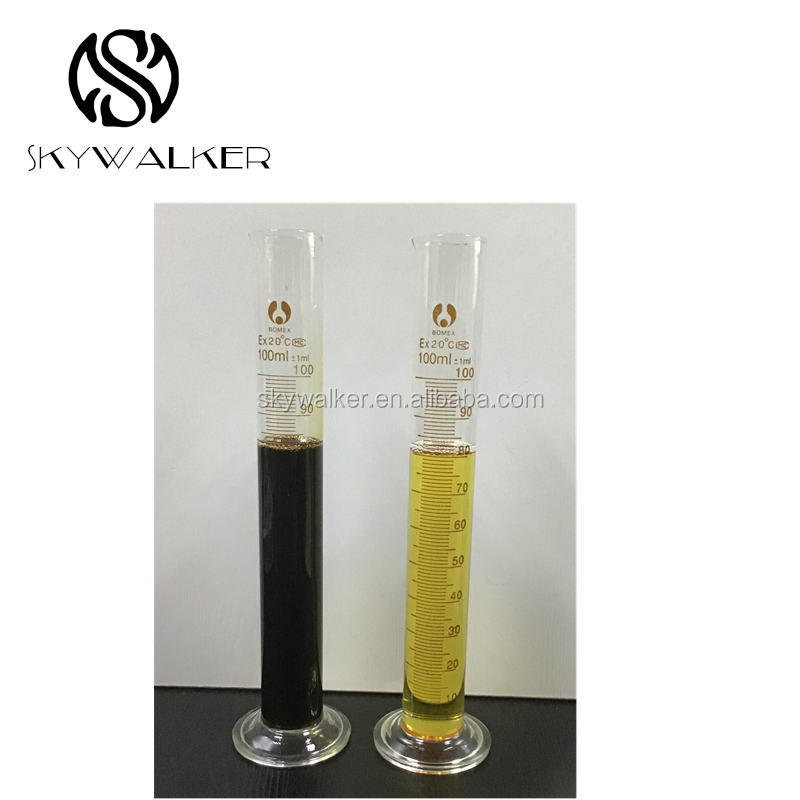
Setting offDiatomite filter aid operates as optimal clearing material broadly employed in various production activities, particularly throughout liquid treatment. Sourced from the fossilized remains of microalgal fossils, it displays a unique mesh-like layout that allows for excellent clarification. It works by creating a light porous film on a screening diatomaceous earth device, holding minuscule sediments while providing fluid permeability. Finding the optimal rank of diatomite filter aid is critical for optimal performance.
Harnessing Micro-shells Residue for Refinement
Silica-rich powder, composed of the fossilized remains of microscopic algae called diatoms, presents a distinctive option for filtration various ingredients. Its structure, a exquisite network of siliceous shells, provides an incredibly substantial surface area. This enables for highly efficient removal of suspended matter from solvent blends. Employments range from fluid purification and fermented drink fabrication to recreational water screening and even soil-based applications. Merits include its natural origin, monetary advantage compared to several synthetic alternatives, and its potential to accurately contain a diverse range of undesirables.
- Delivers superior substance removal.
- Acts as a environmentally sound choice.
- Relevant for several sectors.
Treated Bleaching Substance: Properties and Purposes
Processed bleaching matrix is a form of virgin mudstone that has undergone special preparation to enhance its capturing potential. This system typically involves thermal metamorphosis, resulting in a modified design with a extensive terrain. Consequently, it exhibits remarkable competence to eliminate stains from a wide array of phases, finding key jobs in the purification of fatty substances, fats, and other biogenic entities. Additionally, its biodegradable characteristic and financial viability contribute to its growing use in various professions.
Choosing Between Diatomite and Alternative Filtration Media
Picking the most suitable clarification component for a specific process can be difficult. While zeolite and other variants exist, diatomite frequently presents a convincing case for its eminence. Compared to these alternatives, diatomite habitually offers better purity and an increased velocity of separating particles. However, this optimal choice ultimately is contingent on determinants such as outlay, application requirements, and expected result caliber.
The Science Behind Diatomite Filtration
Diatomite powder sometimes referred to as microalgal sediment filtration separating leverages the unique special structure of such microscopic microscopic algae remains. These those diatoms, upon following death, form yield a sedimentary rocky rock mass composed formed of intricately finely porous openwork silica siliceous shells. This aforementioned porous lattice-like network system provides an incredibly surprisingly large volume for catching particulate suspended matter or debris from or within liquids fluidic systems, achieving facilitating highly potent accurate filtration distinguishing.
Enhancing Whitening Performance Using Treated Clay
Enhancing the purifying approach via treated earth presents a viable solution for elevating capacity. Such organic material, taken from sediment, possesses outstanding capturing properties that allow it to adeptly clear discolored impurities from woven materials, thereby decreasing dependence on harsh non-organic substances and promoting a healthier performance.
Knowing Diatomite Filtration Powder Categories
Selecting the appropriate microsilica quality is important for productive filtering processes. Porous sediment grades are determined by their granular scale, traditionally expressed in particulate dimensions. Finer grades, like FF or Filter-X, offer remarkable clarity and are compatible for sensitive liquids, while bulkier grades, such as Perlite or Celite 500, offer a stronger liquid transfer for minimal applications. Understanding these contrasts will promote you to boost your cleansing performance and decrease costs correlated with the approach.
Green Sourcing of Earth-based Earth
The increasing demand for mineral sediment earth necessitates a focus on green sourcing policies. Traditional mining often comprises significant habitat disturbance and can impact regional ecosystems. At this time, forward-thinking companies are developing alternatives, such as renewal of previously mined sites, ensuring lowered disruption and defending faunal habitats. Furthermore, transparency in the network is developing crucial, allowing shoppers to make informed purchases and endorse environmentally green efforts. In this regard, responsible administration of porous earth earth inventories is vital for long-term availability and limited environmental impact.
- Diminished land interference.
- Revitalization of collection sites.
- Improved traceability in the distribution.
Treated Lightening Substance: A Research Insight
Looking at a theoretical frame, improved clearing earth represents a unique class of aluminosilicate minerals. Primarily, montmorillonite earth is physically modified via processing – typically involving organic solvent processing – to dramatically increase its adsorptive properties. This activation creates a huge spread with a significant number of catalytic residues, facilitating the capture of tinted contaminants from mixtures. The process mainly involves electrostatic linkages and dispersion phenomena, causing a brighter substance.