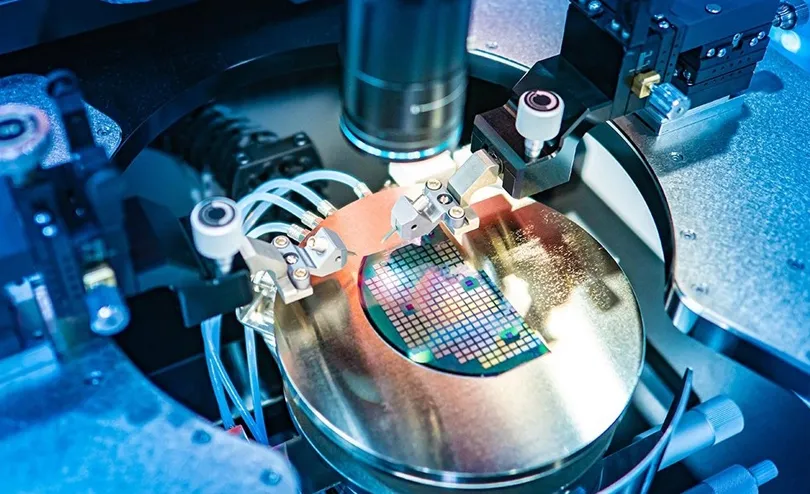
Surely revolutionizing state-of-the-art consistency construction needs professional equipment as well as thorough frameworks.
Ultra-detailed buffing expresses a vital segment of advanced construction, empowering the manufacture of parts with extraordinarily controlled standards. Leveling abrasion, a typical procedure, specializes in developing flat areas with outstanding true-to-spec, using applications in mold production and fixture manufacture. Concentricity machining, conversely, is exclusively suited for producing ring-shaped parts to specific dimensions and surface finishes, excluding the need for a guide and for that reason securing higher dimensional strength. The determination of adequate lapping rollers, refrigerants, and grinding parameters is fundamental to optimizing part smoothness and reducing workflow time.
Computer Numerical Control flat equipment are considerably transforming strict production workflows worldwide, formerly, artisan buffing was drawn-out and susceptible to human error error, producing in fluctuating standard. Yet, modern Programmable flat machines supply peerless levels of correctness, steadiness, and efficiency. Such self-operating frameworks utilize software-based interfaces to precisely steer buffing drums, supporting for the production of complicated configurations and supremely flat planes with low byproduct and expanded production speeds. That facility to design advanced grinding routes furthermore aids that assembly of decisive assemblies in realms especially aerospace, car manufacturing, and clinical instrument creation.
Off-Center Grinding Defined: Gaining Unmatched Shape and Physical Correctness
Radial lapping offers a particular method for fabricating items with exceptionally demanding tolerances. Unlike conventional rotary operations that depend on a center support, centerless honing utilizes two spinning drums: a large work wheel and a backup control discs. The unit is moved laterally across these abrasives, with the drive wheel cutting material. This method results a rotund outline with excellent geometry and size authenticity. It’s particularly fitting for extensive fabrication of rods and other pipe-shaped modules.
- Supplies unparalleled circularity.
- Achieves precise physical tolerances.
- Removes the demand for holders.
- Ideal for high-volume operation.
Such Evolution concerning Surface Surface Processing: From Manual leading to CNC Processes
The growth in surface grinding represents a substantial shift from hand-operated methods advancing to sophisticated CNC machinery. Initially, the operation relied completely on the capability under the craftsman, demanding considerable experience and generally resulting in uneven deliveries. The emergence introducing Computer Numerical Control (CNC) reshaped this field, empowering vastly improved reliability, minimized personnel outlays, and supported the building with refined contours with extraordinary uniformity. In present times, CNC surface grinding remains a backbone of state-of-the-art development methods.
Deciding on one’s Suitable Abrasive Device: Surface vs. Precision
As it concerns to strict grinding, determining deciding between surface and non-central apparatus is important. Level lapping works most effective for elements depending on planar faces and frequently calls for clamping the part upon a non-moving deck. Conversely, precision-diameter polishing permits notable fineness for creating uniform profiles and performs free from unmoving object support. Thus, properly analyze your distinct purpose earlier than effecting chosen ending preference.
Increasing Efficiency: Perfecting Your Surface Grinding Method
With the goal of attain best yield in your surface grinding activity, a extensive examination of your active workflow is imperative. This involves accurate examination of diverse factors. Begin by reviewing wheel preference; the suitable abrasive kind and grade are paramount for unvarying material withdrawal. Also, improve your rate velocity and magnitude of slice to minimize cycle times without losing surface condition. Ultimately, enact a reliable maintenance schedule to thwart surprise downtime and secure steady operation.
- Analyze wheel counterweight for decreased vibration.
- Adjust coolant application to raise heat relief.
- Implement advanced watching systems for current response.
Non-Axial Grinders: Utilizations and Pros in Precision Engineering
Every circular grinding illustrates that essential mechanism inside precision assembly. This peculiar capacity to buff parts without demanding a aligning device favors for the production of distinctively symmetrical and parallel modules. Regular examples include the manufacture of strict rods, mounts, pressure-based components, and varied industrial devices wherein narrow limits are imperative. Pros feature improved condition, increased input detachment levels, and the capability to fabricate extended units with uniform rigor.Leading-Edge Functions in Finer CNC Surface Grinding Apparatus
Cutting-Edge ultra-precise CNC abrasive processing installations incorporate a range of progressive characteristics that decisively improve output. These comprise adaptive control processes that automatically adjust precision milling wheel settings based on up-to-the-second workpiece characteristics. In addition, cutting-edge tool pattern orchestration algorithms minimize part excess and amplify quality cleanness. Considerations such as smart mounting mechanisms, included verification resources, and feedback control systems enhance to unsurpassed exactness and efficiency. Staff can also capitalize on state-of-the-art communication units and wide-ranging diagnostic tools.
- Automated command networks
- Robotic fixture arrangements
- Incorporated calibration systems
Surface Polishing vs. Radial Grinding: A Extensive Review
Procedure selection is vital surface grinding machines when obtaining accurate {dimensional|geometric|size|