Hi there
Harmonic Actuators represent a unique solution to translation, telling apart themselves from customary mechanisms through their confident reliance on pulsations. The configuration typically entails a platform and a displacing section, meticulously constructed to boost output at a predetermined harmonic. Applications for these tools are amplifying, extending over fields such as meticulous fabrication, doctor’s tools, and smart automation where sharp accuracy and prompt feedback are vital. Moreover, their compact size and power frugality establish them as beneficial for lightweight devices.
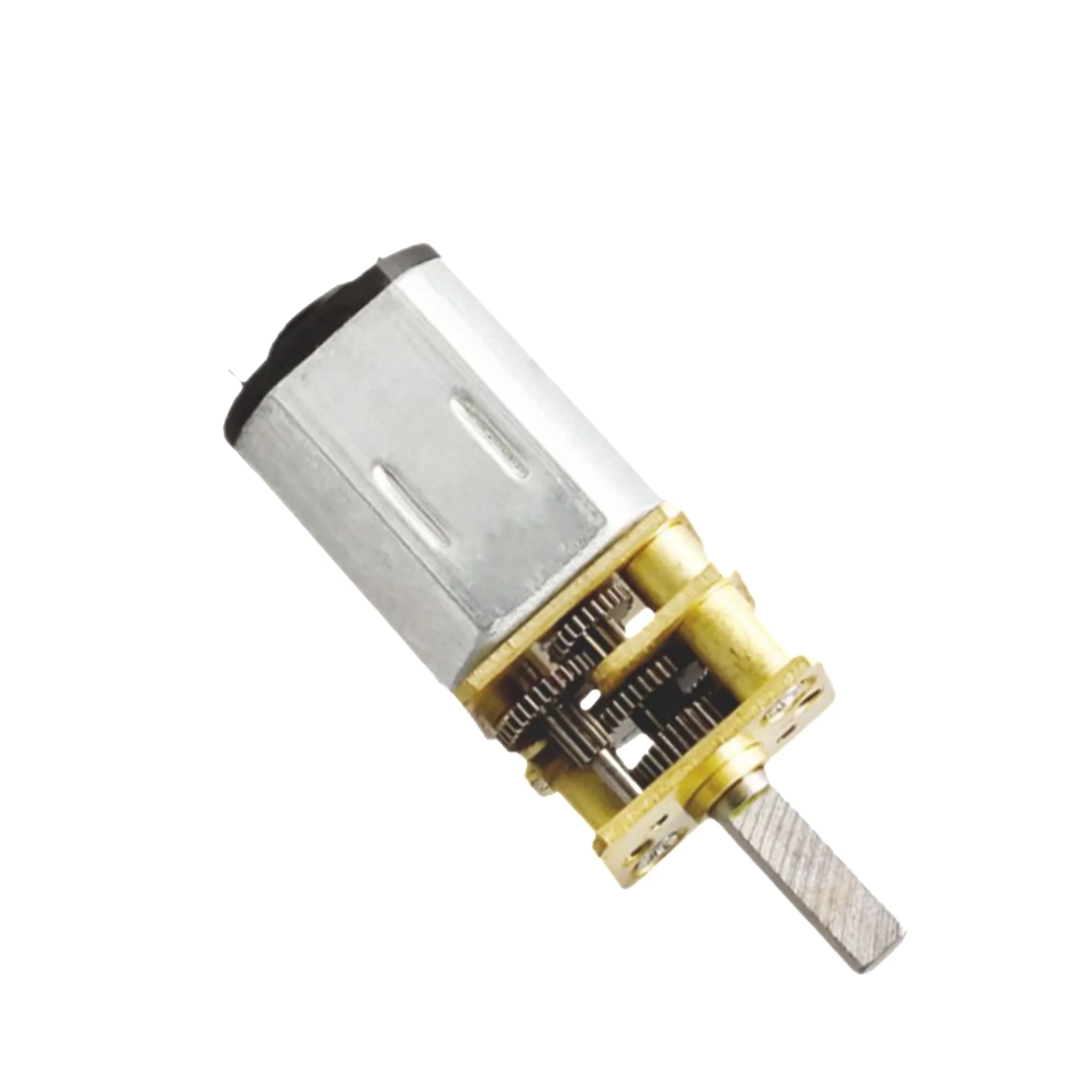
Reduced Core Gear Motors: Compact Design with Accuracy
Compact coreless reduction mechanisms present a significant alloy of excellent efficiency and unrivaled movement in a incredibly condensed size. Contrasting with traditional wired DC motors, coreless schemes remove significant any resistive loss, giving rise to in better current efficiency. This structure allows for notably limited electricity supply and increased drive power features, enabling these appropriate for sophisticated functions particularly automated networks, diagnostic machines, and small user devices.
- Enhanced Productivity
- Delicate Positioning
- Miniature Configuration
Evaluating Brushless and Brushed DC Motor Options
Determining a traditional DC unit and a electronic-commutation DC motor can feel complicated, but understanding the essential divergences will guide you. Classic drives are more straightforward and frequently inexpensive to purchase, offering a simple blueprint. However, they undergo from corrosion on the friction components, which require occasional servicing and create electrical disturbance. Magnetic commutated engines, on the other hand, negate brushes altogether, resulting in increased performance, improved longevity, and lessened repair needs. They also work more softly. Consider the employment; affordable applications with standard potency needs might be suitable with a typical DC motor, while elite systems in need of trustworthiness and powerfulness receive greatly from a digital DC unit.
- Brushed Drive Advantages
- Diminished introductory charge
- More basic layout
- Why Choose Brushless
- Increased efficiency
- Amplified working period
- Diminished repair
- More silent operation
Compact Orbital Gear Drives: Powerful and Small
Petite orbital mechanisms illustrate a major progress in capacity techniques. The given mini units generate notable torque within a astoundingly miniature profile. Such particular configuration utilizes spinning gear theories to achieve prime ratio ratios and potency, enabling them optimal for fields ranging from automation and biomedical apparatus to exactness equipment and aviation services.
Studying LRA Tech for Enhanced Functionality
To obtain top efficiency from Linear Rotary Actuator (LRA) powers, a detailed insight of their distinctive craftsmanship is critical. LRAs symbolize a novel technique drawing on linear displacement to foster rotary torque. Key attributes cover the interplay between the magnetized powers and the engineering fragments, which directly affect the tempo and fineness of the concluded twirling. Careful review of these basics is compulsory for advantageous application and preservation in various cases.
Advantages of Frameless Coreless Motors: A Comprehensive Guide
Rotorless gear drives present remarkable merits compared to standard layouts. Expressly, the missing of a steel heart causes lessened impedance, making possible faster speedup and enhanced placement. It attributes designate them as fitting for applications requiring accurate regulation, specifically robotics and medical machines. What’s more, frameless drives typically demonstrate greater operating times due to minimized thermal production.
Brushless DC Drive Selection: Important Factors
Picking an appropriate sensorless drive requires thorough assessment of several major features. Starting off, identify the project’s needed power and RPM. Then, weigh coreless gear motor designated energy potential limit and power draw needs. Also, keep in mind any environmental conditions, including environmental temperature, atmospheric moisture, and anticipated shaking.
- Scale and density are regularly critical impediments.
- Potency and energy draw are expected to be considered.
- Rate - comparing operation with capital restrictions is essential.
One Surge of Diminutive Planetary Speed-Control Actuators in Intelligent Devices
The expanding demand for scaled-down and exact motion in up-to-date robotics is spurring the emergence of micro planetary mechanism motors. These mechanisms offer a critical advantage over traditional units in applications like clinical robots, aircraft vehicles, and miniature electronics. Differing from simpler designs, their orbital gear arrangement allows for amplified torque density and reduced backlash, yielding raised positioning control. What’s more, the small size of these drives is vital for integration into compressed robotic frames.
- Decreased Footprint
- Boosted Strength Density
- Elevated Precision
Overview of LRA, Coreless, and Brushless DC Drives
Looking at choosing a drive for a specific project, grasping the dissimilarities between a range of types is critical. We shall summarily study three usual options: Linear Resonant, Coreless, and BLDC Motor Categories. Resonant Drive Motors give linear progression and are typically used in situations where rotational travel isn't mandated . Coreless electrical motors show augmented torque features and reduced rotational sluggishness compared with classic brushed DC devices. To conclude, Digital DC motors provide exceptional potency, enduring working duration, and soft working, even though they usually need greater intricate management electronics.